
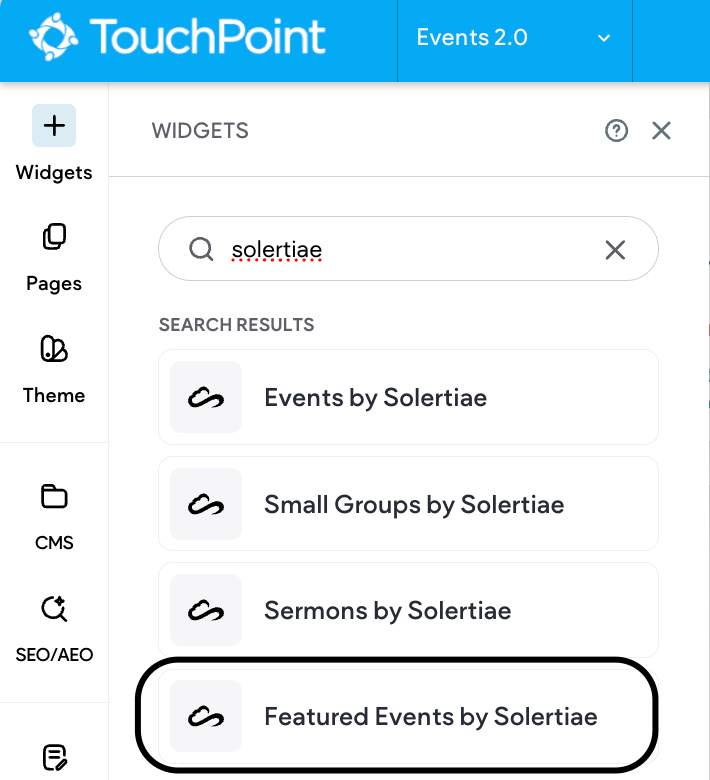
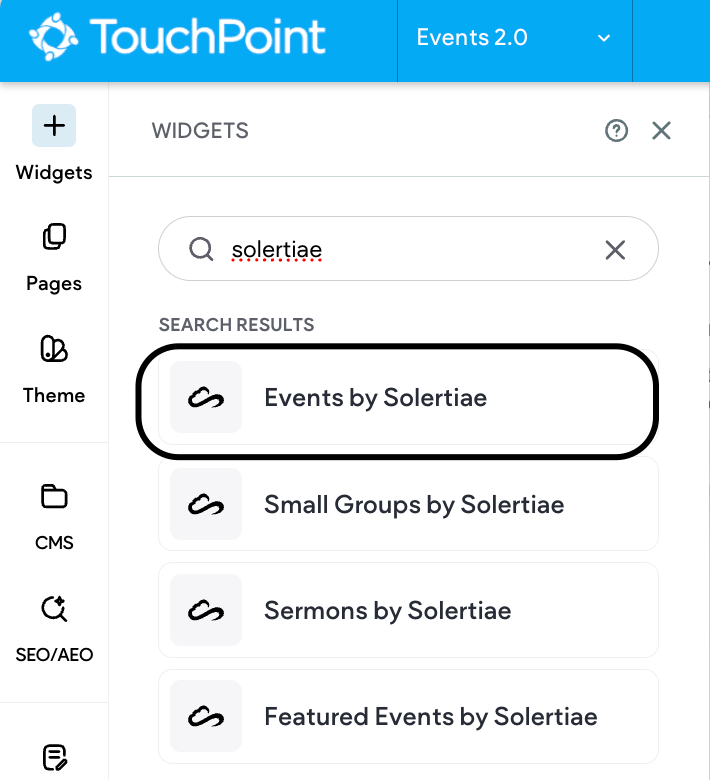
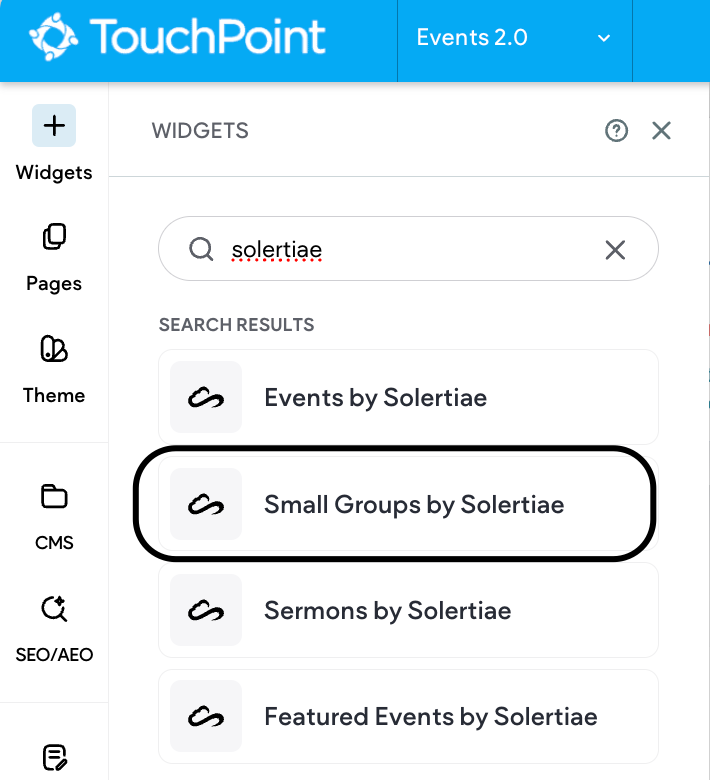
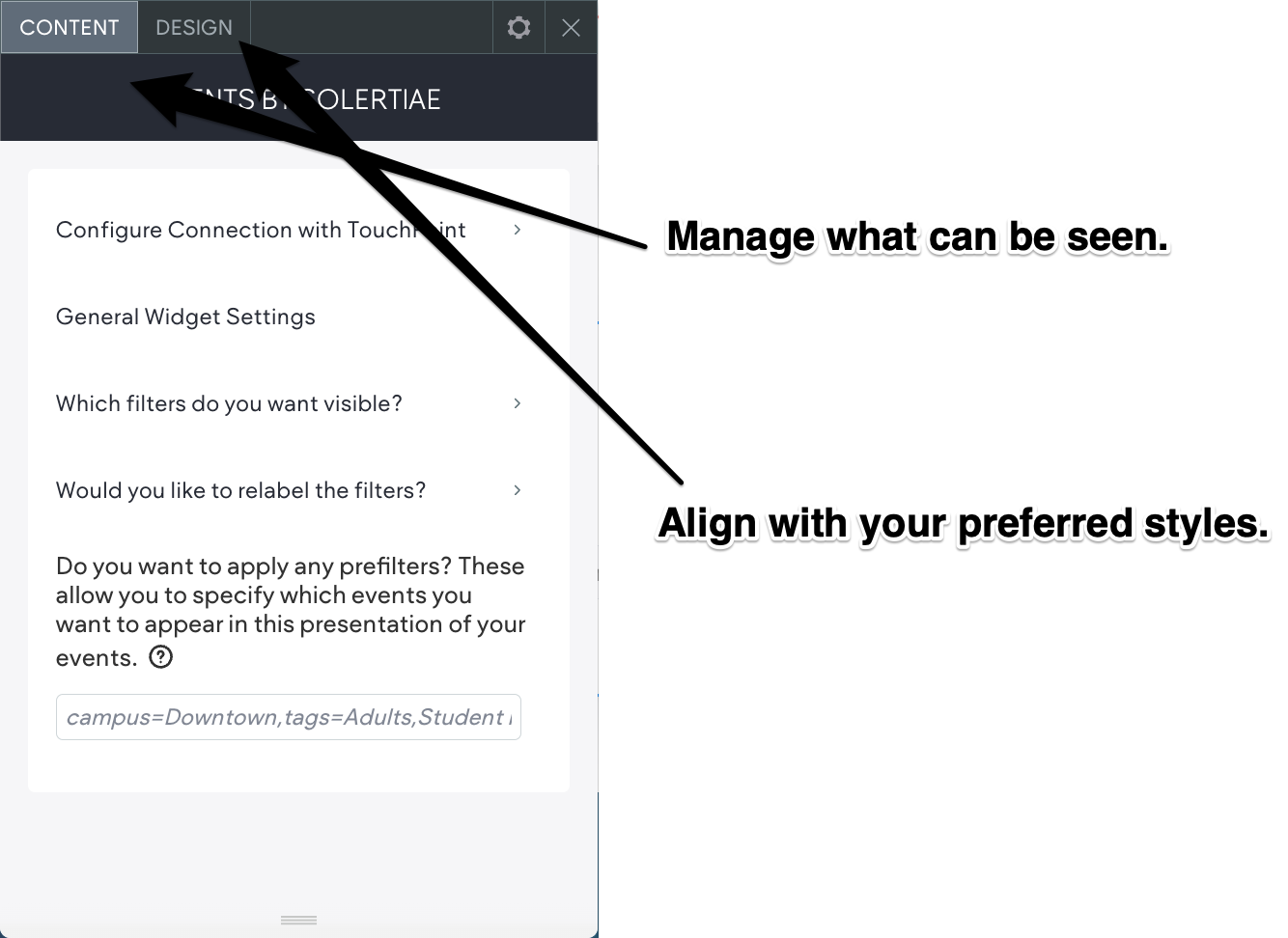
Manage the Configuration
The options here have been simplified while also enhancing capabilities for customization.
SEO vs AEO vs GEO
What in the world are these ... and why do they matter?
Search is changing quickly. Traditional Search Engine Optimization (SEO) is no longer the only way people discover content online. Today, your content might be surfaced by:
- Traditional search engines like Google or Bing
- AI assistants like ChatGPT or Gemini
- Voice assistants like Siri or Alexa
- AI-generated search summaries
Because of this shift, three related concepts are becoming increasingly important:
- SEO — Search Engine Optimization
- AEO — Answer Engine Optimization
- GEO — Generative Engine Optimization
Understanding how these work together can help you decide how to configure your widgets.
SEO (Search Engine Optimization)
SEO is the traditional approach to helping search engines understand and rank your content.
It focuses on things like:
- Page titles and meta descriptions
- Structured page content
- Internal linking
- Canonical URLs
- Page performance and accessibility
- Clear information architecture
The goal is simple: Help search engines crawl, index, and rank your content so people can find it.
When SEO matters for widgets...
If your widget content represents valuable standalone content (events, articles, resources, directories, etc.), then SEO likely matters.
In that case you should:
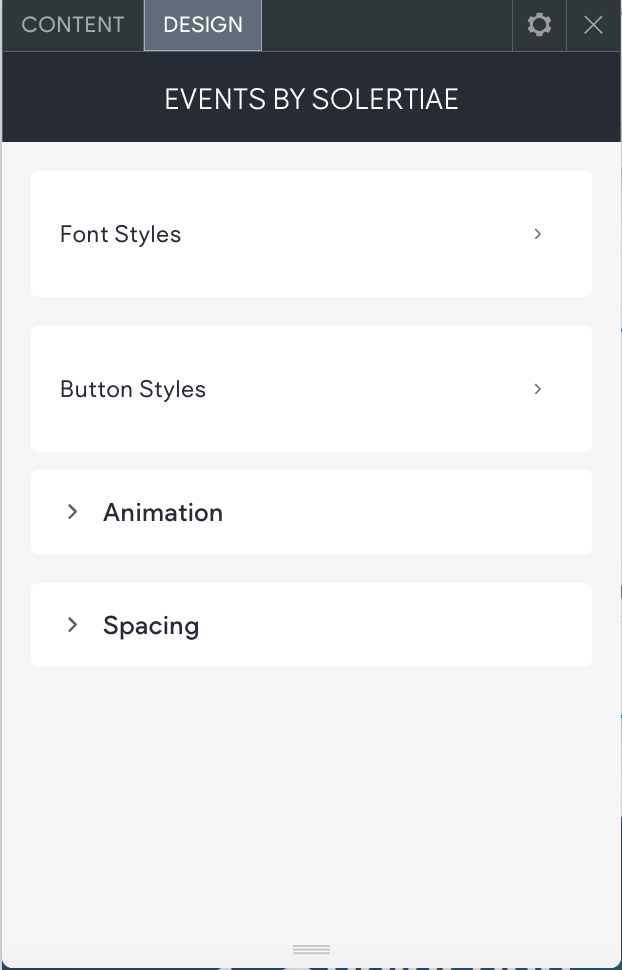
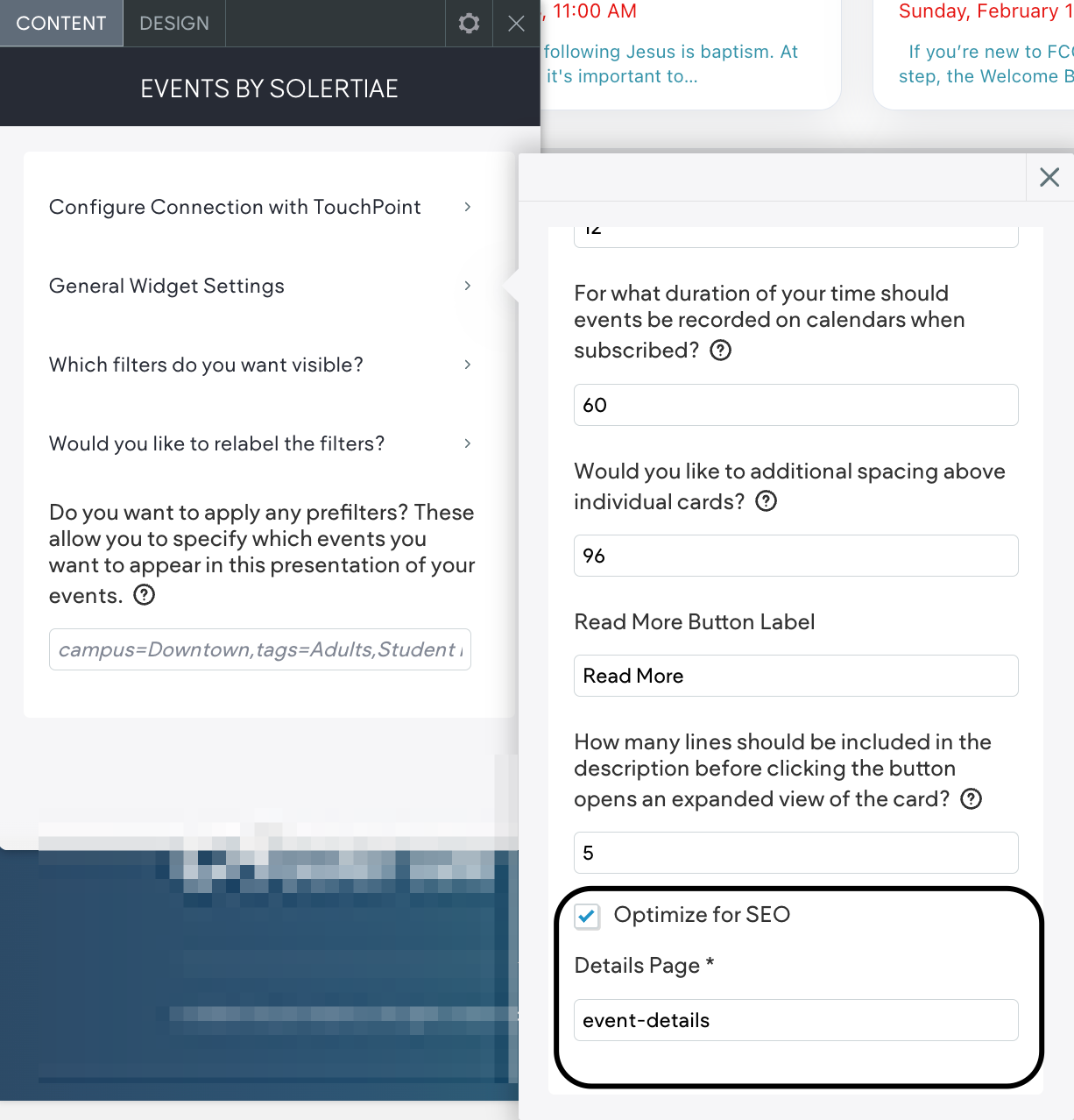
- Enable “Optimize for SEO”
- Use a dedicated dynamic page
- Connect it to an External Collection
- Ensure canonical URLs are generated for each item
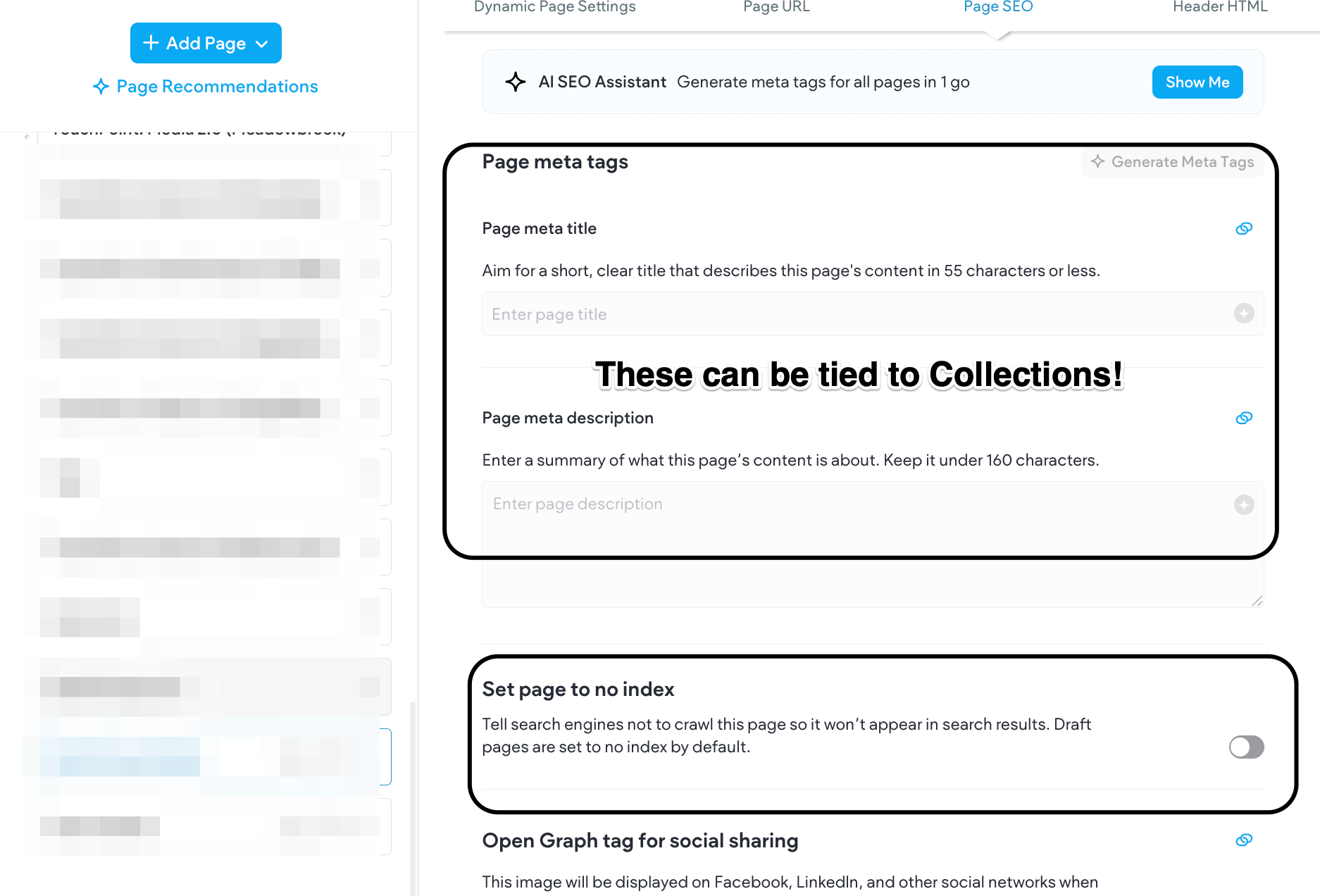
- Populate meta titles and descriptions from collection fields
This allows search engines to properly index each item.
Without a dedicated page and canonical links, search engines often cannot properly understand or index the content.
When SEO is NOT important...
Sometimes a widget is intended purely for site users, not search engines.
Examples might include:
- Internal resources
- Logged-in experiences
- Navigation widgets
- Temporary content
If that's the case, you can safely tell search engines to ignore it.
Set the page to: No Index = TRUE and do not enable "Optimize for SEO"
This tells robots: “Don’t include this page in search results.”
AEO (Answer Engine Optimization)
Answer Engine Optimization focuses on helping your content be used as a direct answer in search results.
Examples include:
- Featured snippets
- Voice assistant responses
- AI-generated summaries
- Quick answer boxes
Instead of ranking a page, the engine extracts an answer from your content.
AEO best practices
Content optimized for AEO typically:
- Clearly answers a question
- Uses concise explanations
- Includes structured headings
- Uses schema / structured data
- Provides authoritative, trustworthy content
Example format that works well for AEO:
Question: What was the sermon about this week at Grace Community Church?
Answer: This week’s sermon explored how faith can help us navigate uncertainty by trusting God’s guidance, focusing on Psalm 23 and the image of God as a shepherd who leads and protects His people.
Question: What happens in a church small group?
Answer: A church small group is a gathering where people meet regularly to study the Bible, discuss life and faith, pray for one another, and build meaningful relationships.
Question: What is the Fall Festival at Grace Community Church?
Answer: The Fall Festival is a family-friendly community event featuring games, food, music, and activities for children and adults.
GEO (Generative Engine Optimization)
Generative Engine Optimization is the newest frontier.
Instead of simply ranking links or extracting answers, AI models generate responses using information they find across the web.
Examples include:
- Google AI Overviews
- ChatGPT browsing answers
- Perplexity search results
- Bing Copilot summaries
These systems analyze trusted sources and generate a synthesized answer.
Your content becomes part of the knowledge base used to generate those answers.
GEO best practices
Content optimized for generative search typically:
- Provides clear explanations
- Includes authoritative signals
- Is well structured
- Uses strong topical coverage
- Demonstrates expertise and credibility
Think of GEO as: “Make your content the kind of source AI trusts when building answers.”
Want to go deeper with SEO, AEO, and GEO?
SEO, AEO, and GEO are evolving rapidly, and staying ahead requires both technical expertise and strategic content development.
If you're interested in taking your search strategy further, we can connect you with specialists who have decades of experience helping churches and mission organizations succeed online, including adapting to the latest shifts in AI-driven search.